

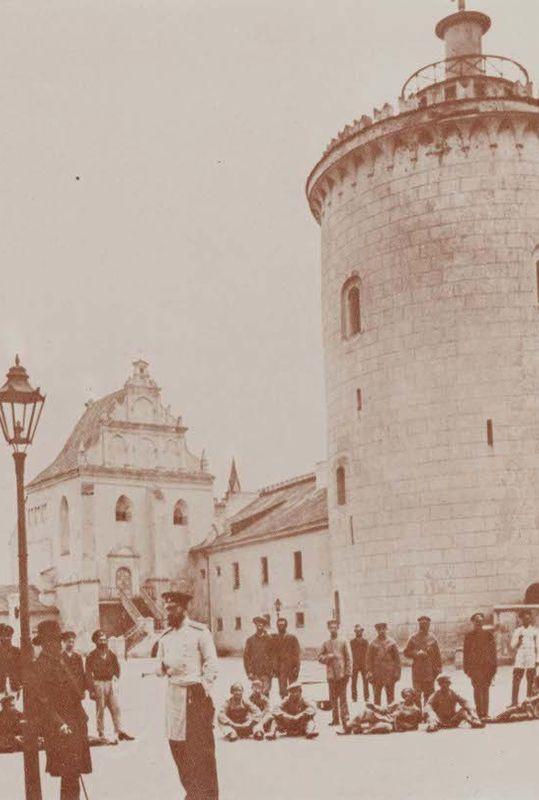
Navigational story for Castle - National Museum in Lublin
Zamek - Muzeum Narodowe w Lublinie
Parallel to Szeroka Street, but closer to the castle, ran Castle Street and Podzamcze Street, which intersected with it, surrounding the castle from the south. On the western side stretched Nadstawna Street, called Cheder Street, as it housed many schools for Jewish children. The houses of prayer of Hasidic Jews from Góra Kalwaria and Kazimierz Dolny were also located there.Although Lublin was known as a "fortress of Orthodoxy," from the end of the 19th century, new currents - socialism and Zionism - gained increasing importance here as well. At the intersection of Nadstawna and Kowalska Streets there was a large empty square where rallies and political gatherings were often held.In the 1930s. In the 1920s, between the numerous houses of prayer, on Szeroka Street, there was also the secretariat of the Bund party, the trade unions associated with the party, and the Lubliner Sztyme newspaper. The workers sang their songs with growing pride and joy, and whenever eight or nine gathered, a tenth would invariably spring up from somewhere to preach to them, always beginning with, "Comrades and citizens." Elderly Jews, passing such gatherings, would mutter disapprovingly under their breath, "If things don't get better, they'll surely get worse."Jacob Glatstein, The Glatstein Chronicles - Homeward Bound, 2010 (Ven yash iz geforn, 1937) .